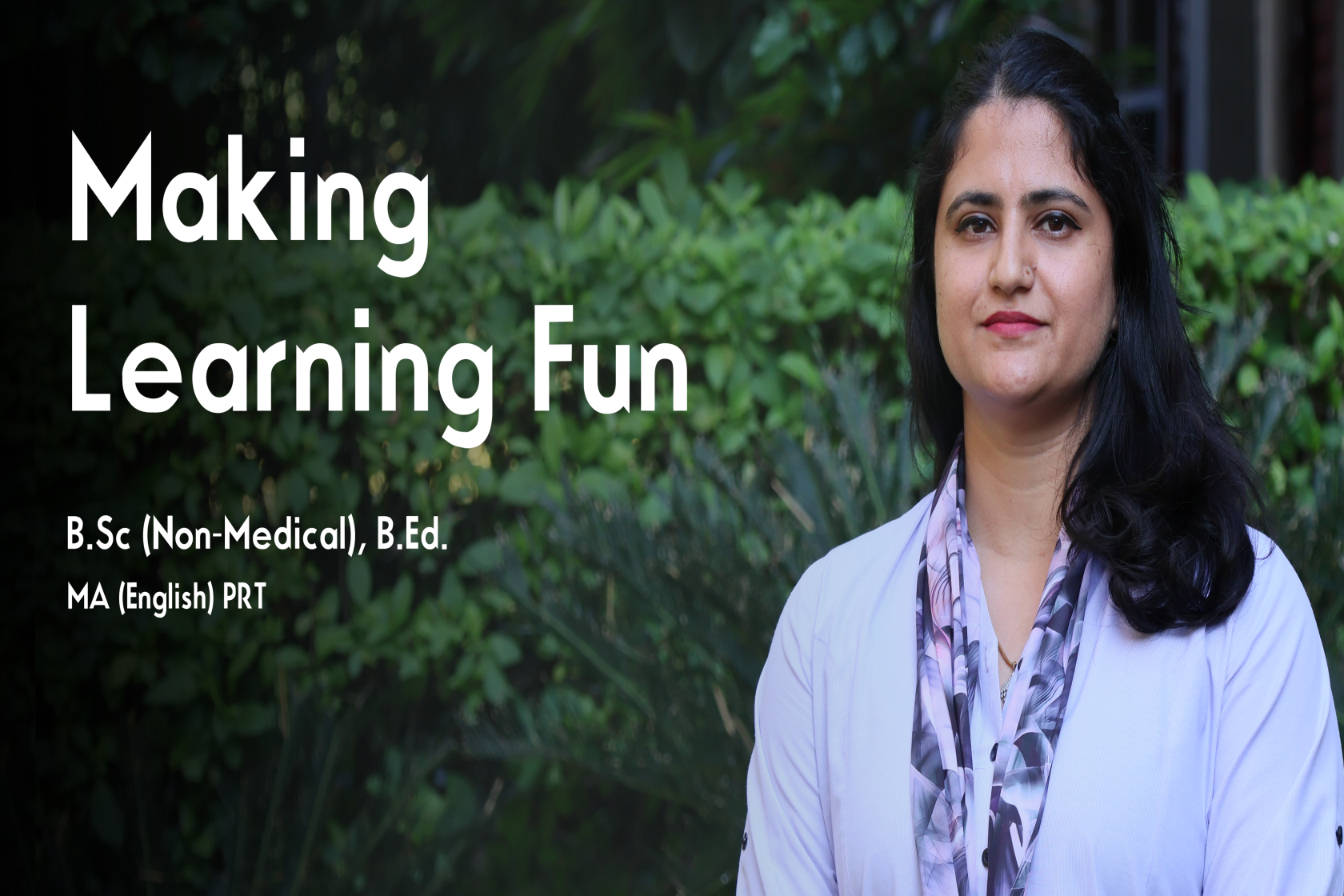
As I plan my lesson for the next day, I introspect. I question myself; how will my students learn best? Will they enjoy my class? Will they be able to understand? What doubts will they have? I strongly believe that an individual learns best during the pursuit of one’s own joy. I was once a student and there are learning experiences that are truly embedded in my memory to date. I remember and deeply cherish those learning experiences. From my English teacher, who transported us to another world when she read Shakespeare or Robert Frost, to my math teacher who cracked jokes during a somber topic not just to lighten the atmosphere but to make us always remember that concept through the joke. My science teacher always emphasized practical hands-on work for better clarity and my history teacher frequently took us to the audiovisual room to present documentaries. Learning is often associated with textbooks, classrooms and a serious demeanor but it doesn’t have to be that way. Injecting an element of fun into the learning process not only engages students but also enhances the overall experience.
I feel my students also learn to the fullest when there is a joyous atmosphere in the classroom. They tend to learn better with out-of-the-box lesson planning which includes playing games, quizzing sessions, visiting the doctor’s room or school garden to conduct a survey, or simply crafting a project on a grammar topic. They enjoy these experiences which have lifelong learning impressions associated with them. Activities like Show and Tell which are a part of our curriculum and are conducted on a weekly basis, on one hand fill the students with excitement and enthusiasm and on the other are a great source of knowledge and learning. A math topic of fractions can be taught using the traditional method of drawing shapes and shading them on the blackboard. The students will understand the concept but if this topic is taught using an origami activity, it will enhance their learning by engaging multiple senses and make learning enjoyable. Students like to be given activities in their scrap files where they can use their vast ocean of imagination and come up with their own unique solutions. They also greatly enjoy displaying their talent and earning appreciation for the same. This boosts their self-confidence. So, fun activities in the classroom are an integral part of a harmonious learning atmosphere. Learning can be made fun in various ways:
- Embracing creativity as a teaching tool allows students to explore their interests, artistic endeavors and talents.
- Integrating technology with learning completely captivates students by providing immersive opportunities.
- Incorporating games, puzzles and quizzes helps to turn abstract concepts into interactive challenges.
- Field trips like visiting museums, science centers, historical sites, zoos and bird parks provide a break from routine and help to anchor academic knowledge in the real world.
- Experiential learning engages multiple senses and learning styles which enables students to develop a comprehensive understanding of the subject matter through hands-on experiments, group projects, or real-world simulations.
Ultimately, making learning fun is not about diluting academic rigor; instead, it is about infusing zeal and curiosity into the educational journey. When students enjoy the process of learning, they become active participants, eager to explore, discover, and embrace knowledge. By transforming education into an engaging and enjoyable adventure, we empower learners to navigate the complexities of the world with a zest for continuous discovery.